


What is Web 3.0?
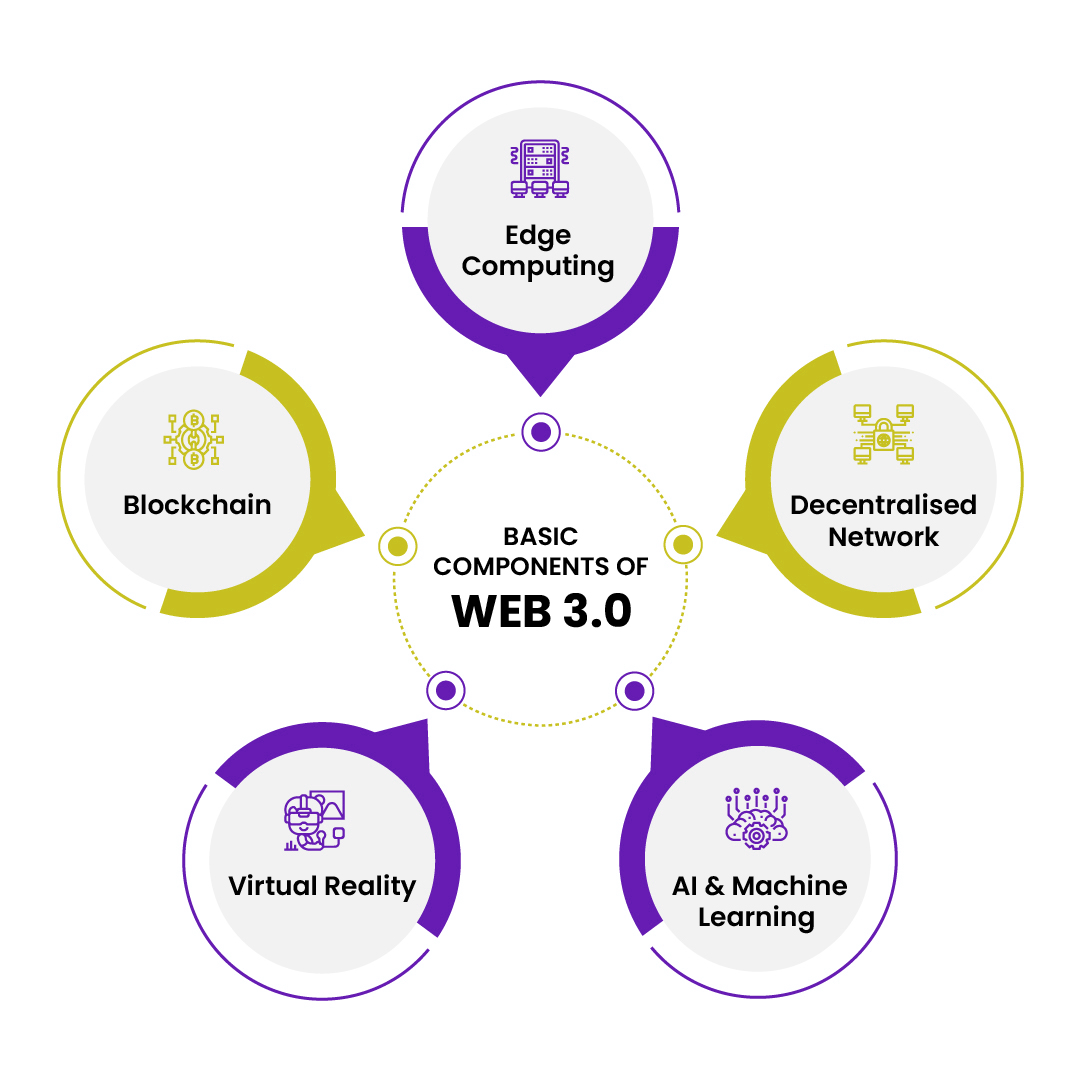
There are several ways to define Web 3.0, depending on which area of technology we focus on. What we can say for certain is that it marks a new stage in the evolution of the Web, where multiple technologies are starting to come together. Disruptive innovations such as blockchain, virtual reality, and artificial intelligence are helping to shape the emerging spatial semantic web.
Over the next few years, these technologies will work together to create solutions that make the online world more user-friendly, democratic, and secure. At the moment, many people associate Web 3.0 only with blockchain. While blockchain is indeed a core technology—because it enables ownership and exchange of both physical and digital assets without a central authority—it is only one part of the picture.
New protocols and user interfaces will be built on top of these foundations to support a more intelligent, spatial web. Web 3.0 is far more than most people expect: this technological fusion is likely to enable the first truly decentralised metaverses within the next five years.
The Evolving Web
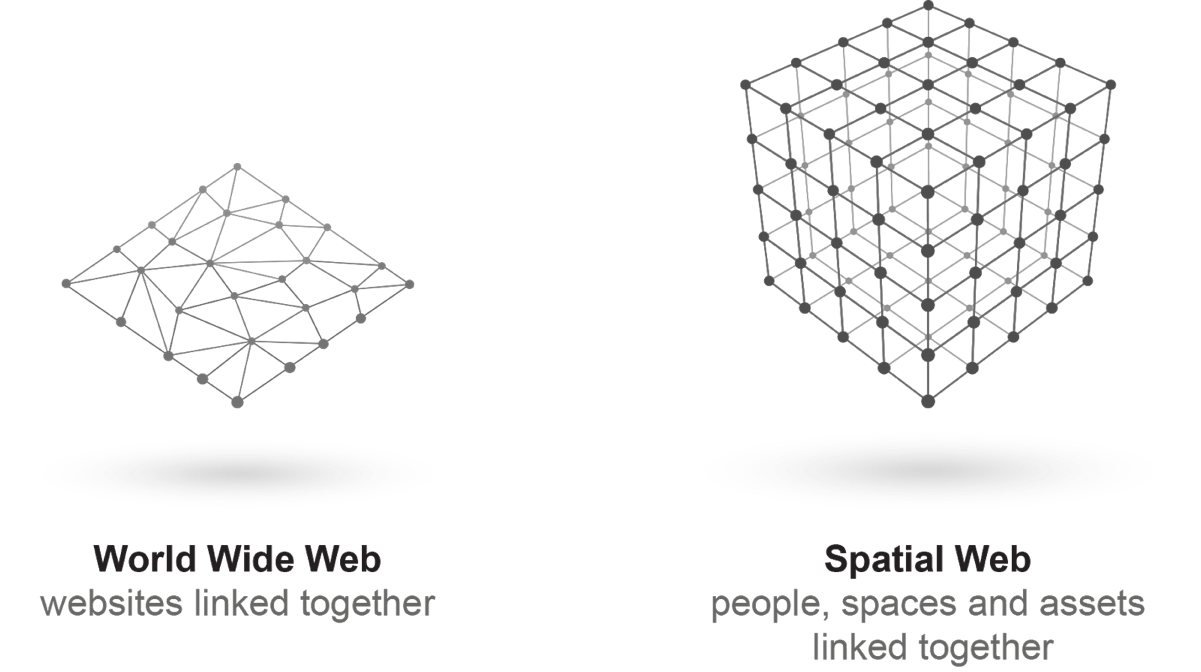
As the internet has evolved, it has become increasingly accessible and user-friendly. Improvements in both hardware and software have opened up new use cases and new ways for people to interact with computers.
It is important to understand that Web 3.0 is not only about the underlying technologies, such as blockchain or distributed databases. Instead, it represents a transformation across multiple layers of the entire web. The relationship between humans and computers has always been developing—consider how the computer mouse still shapes our interaction with digital content even today. Touchscreens later allowed us to rethink interface design and make digital experiences simpler and more intuitive.
One of the most exciting aspects of Web 3.0 is the emergence of the 3D interactive Web, which includes virtual reality (VR) and augmented reality (AR). These technologies enable rich, immersive experiences within virtual worlds, often referred to as the metaverse. Blockchain can support ownership tracking of digital assets (such as NFTs), while IoT devices and 5G/6G networks provide the high-speed connectivity required for real-time 3D interaction.
Now is the moment to expand our understanding of virtual reality and begin exploring web-based interaction through the Spatial Web. What may seem futuristic today is likely to become part of everyday life within a few years.
The next evolution of the Web will blur the boundaries between the physical and digital worlds. Generative AI will support communication and content creation, and the fusion of these technologies will happen gradually—often without us even noticing.
Semantic Technologies
We already use elements of the semantic web today whenever we search the internet. The goal of Web 3.0 is to fully integrate semantic technologies, enabling computers to genuinely understand the meaning and relationships within data. Unlike Web 2.0—where search is largely based on keywords and metadata—Web 3.0 offers a far more sophisticated level of semantic understanding.
In this new phase, data is processed more deeply through artificial intelligence (AI) and machine learning (ML) algorithms, including large language models. This allows search engines to deliver more accurate and relevant results. Large language models such as ChatGPT, Meta Llama, and Google Bard are currently among the most advanced tools for understanding user intent and providing meaningful responses.
The Layered Architecture
The architecture of Web 3.0 represents an evolution in the design and functionality of the internet, built on the principle of decentralisation and driven by emerging technologies. To help illustrate this, we created a diagram showing five interconnected layers, each building on the one below.
Data travels from the physical layer to the application layer through several intermediate layers, such as the communication layer, the network layer, and the semantic layer. Each of these layers can be implemented using specific technologies, including IoT devices, 5G networks, blockchain systems, semantic web standards, and 3D interactive web technologies.
The future lives in me.....
Core Technologies I’m Passionate About
Why I actually fell in love with these technologies is because they are the building blocks of a new era of human–computer interaction. I believe the ultimate form factor for immersive technology is a pair of smart glasses — comfortable for daily use and capable of integrating XR, generative AI, and neurofeedback. These devices can open the gateway to the first truly mixed-reality Metaverse, where digital and physical worlds seamlessly converge, creating personal and transformative experiences.
01
Learn more
Spatial Computing
A computational approach that enables digital systems to perceive, map, and interact with the physical 3D environment in real time.
02
Learn more
Generative AI
A class of machine learning models capable of producing novel data—such as text, images, audio, or 3D content—by learning underlying patterns from large training datasets.
03
Learn more
Neurofeedback
A form of biofeedback that uses real-time electrophysiological measurements—typically EEG—to train individuals to self-regulate specific patterns of brain activity.
04
Learn more
Web 3.0
A decentralised internet architecture that uses blockchain, distributed protocols, and semantic technologies to enable user-owned data, trustless interactions, and interoperable digital assets across applications.